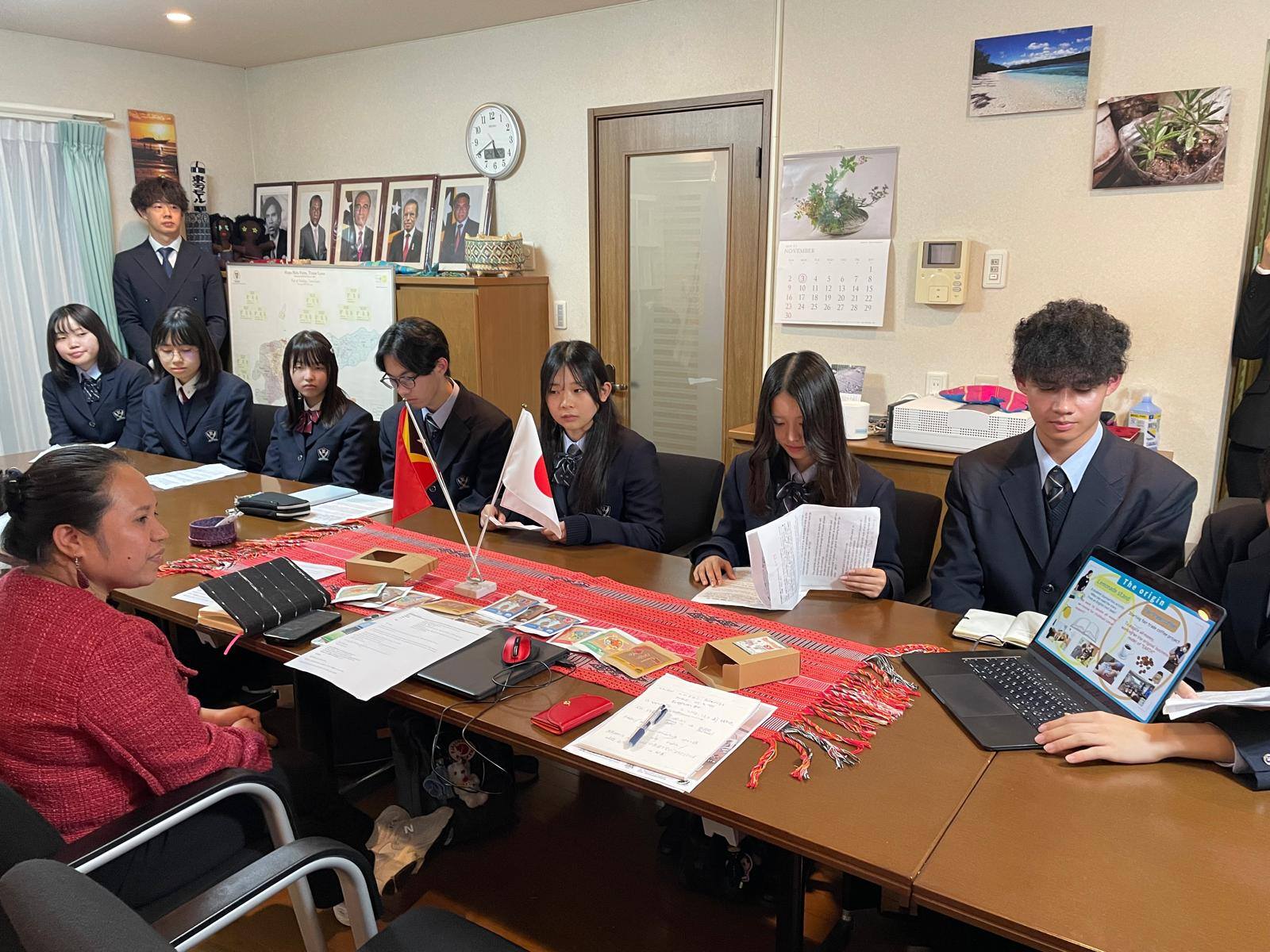
Tokyo, 29 October. The Embassy of the Democratic Republic of Timor-Leste (RDTL) in Japan received a visit from students of the Sustainable Development Goals (SDGs) Study Group at the junior and secondary school levels, accompanied by teachers from Reitaku School, Tokyo. The visit was received by Ms. Faviola Henriques, representing the Embassy of Timor-Leste in Japan.
Support for the Promotion of Timor-Leste Fair Trade Coffee
The visit aimed to express respect and support for the promotion of Timor-Leste’s fair trade coffee in Japan. During the meeting, the students presented their ideas and raised questions regarding innovative designs they had developed for Timor-Leste drip coffee packaging.
They also inquired about opportunities to visit Timor-Leste, key tourist destinations to explore, and the roles and responsibilities of diplomats serving at an embassy.
Incorporating National Symbols into Coffee Packaging Design
In response, Ms. Faviola Henriques da Cruz, in her capacity as Financial Administration Technician, conveyed the Embassy’s appreciation for the students’ initiatives and efforts to promote Timor-Leste through coffee products in Japan.
She suggested that coffee packaging designs could incorporate national symbols of Timor-Leste, such as the iconic crocodile, traditional houses from Lospalos, the Cristo Rei statue in Dili, as well as traditional tais motifs, as a way to introduce Timor-Leste’s cultural identity to the international community.
Promoting Tourism and Natural Heritage of Timor-Leste
Ms. Faviola also encouraged the students to taste Timor-Leste coffee and to visit the country in the future to experience firsthand its cultural richness and natural beauty. She highlighted several notable tourist destinations, including the pristine Jaco Island, Atauro Island with its strong ecotourism potential, the Cristo Rei statue in Dili, and the hot springs in Bobonaro.
Roles and Responsibilities of Diplomats at the Embassy
In closing, Ms. Faviola briefly explained the roles and responsibilities of diplomats at the embassy. While her primary duties focus on managing the embassy’s financial administration, limitations in human resources also require her to support diplomatic functions.
Such support includes participation in receptions and workshops, communication with Japanese government institutions via email and telephone, handling protocol matters, and attending official meetings.