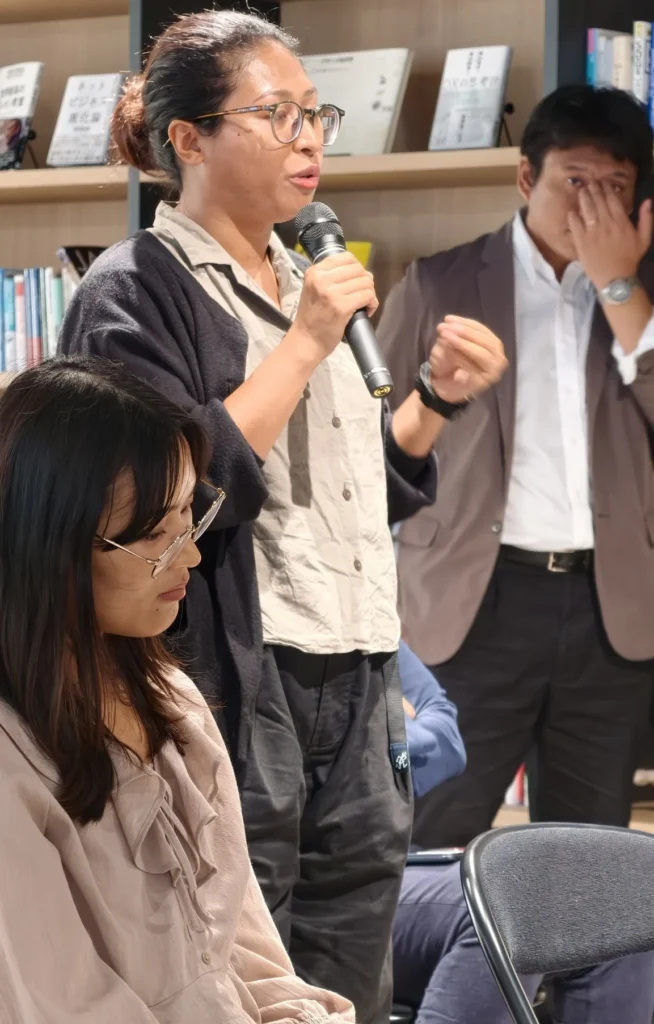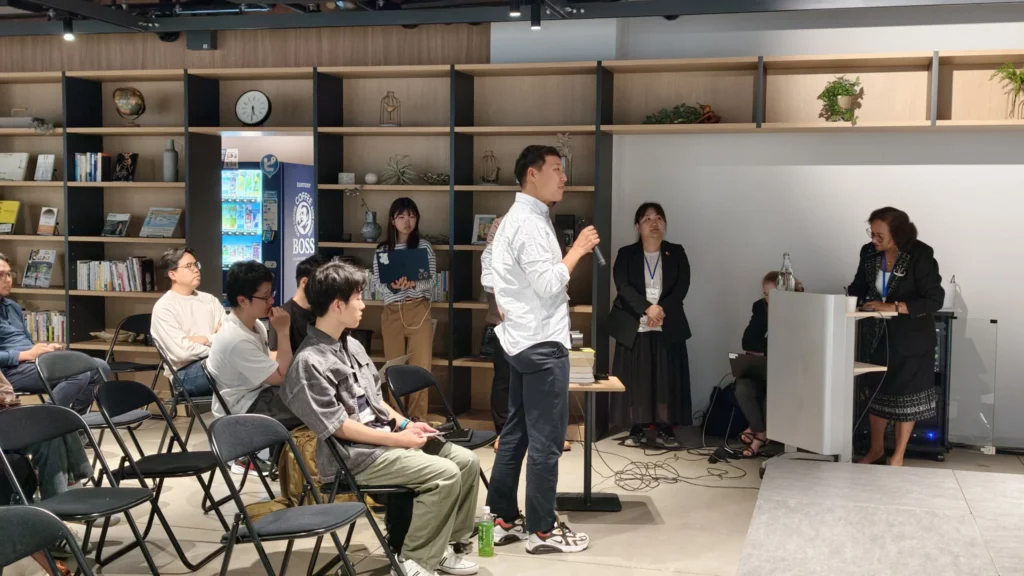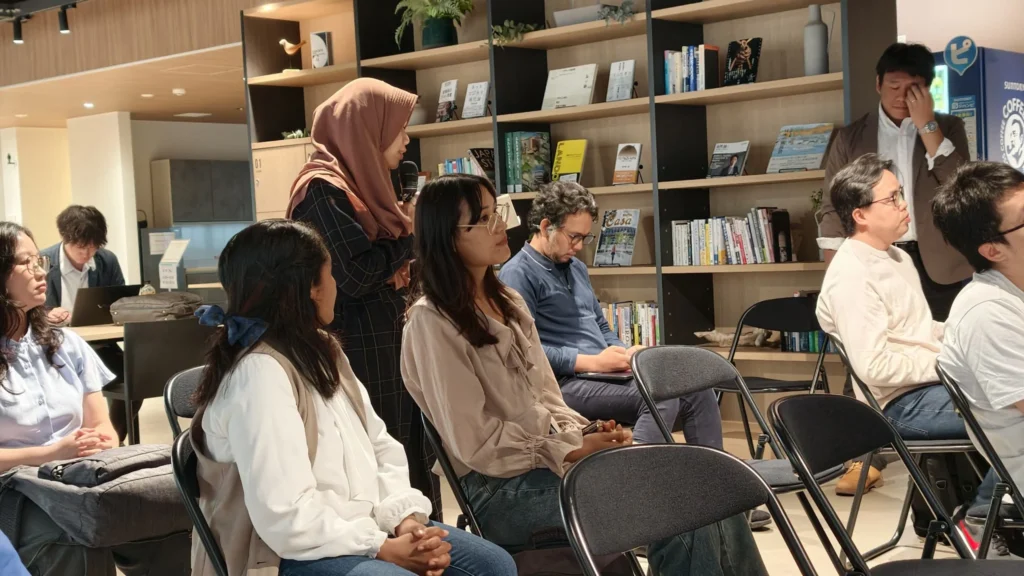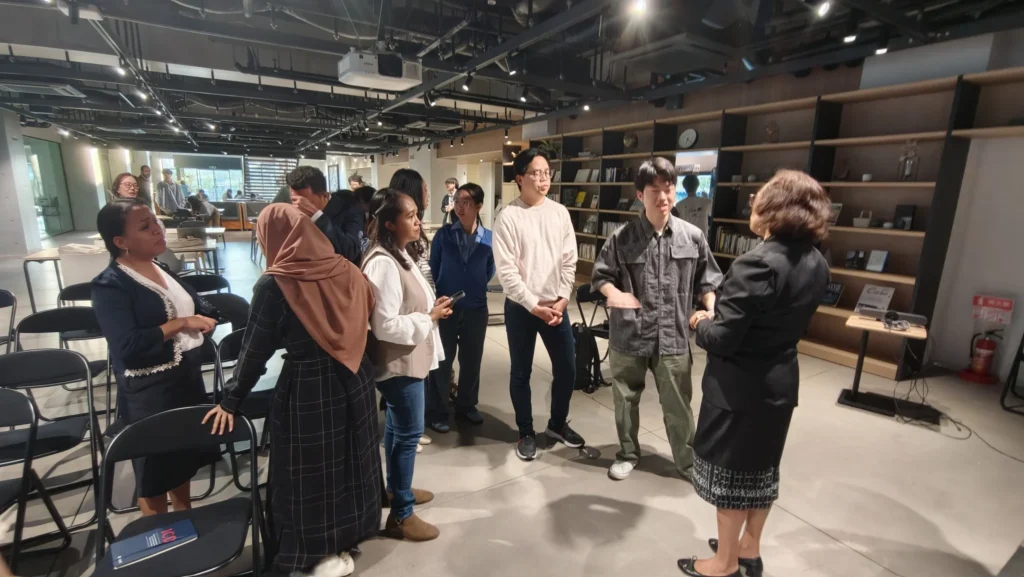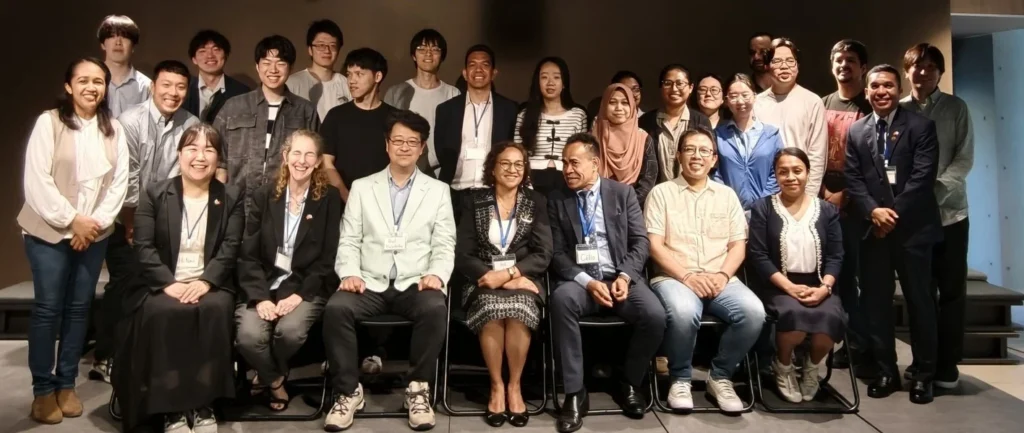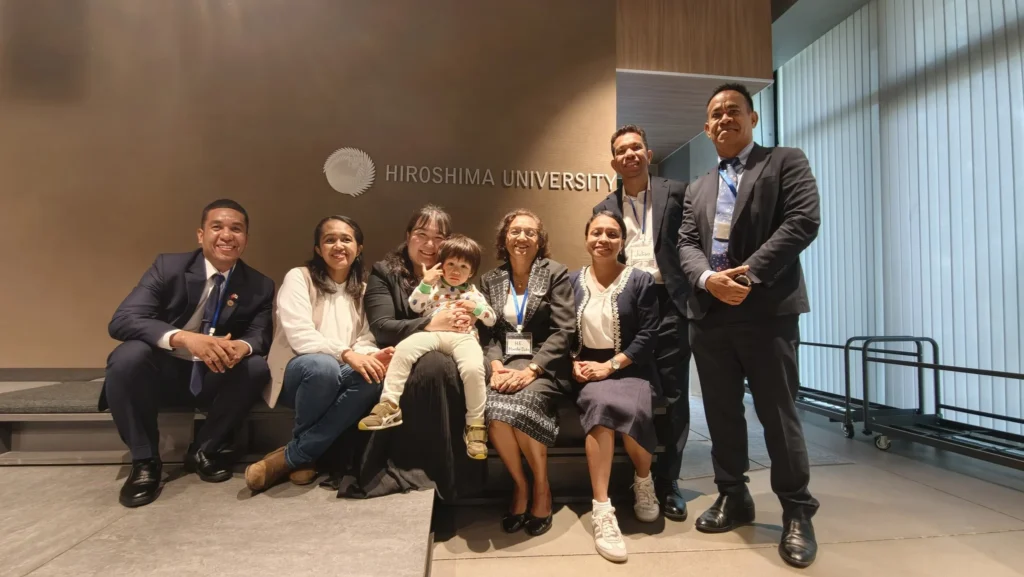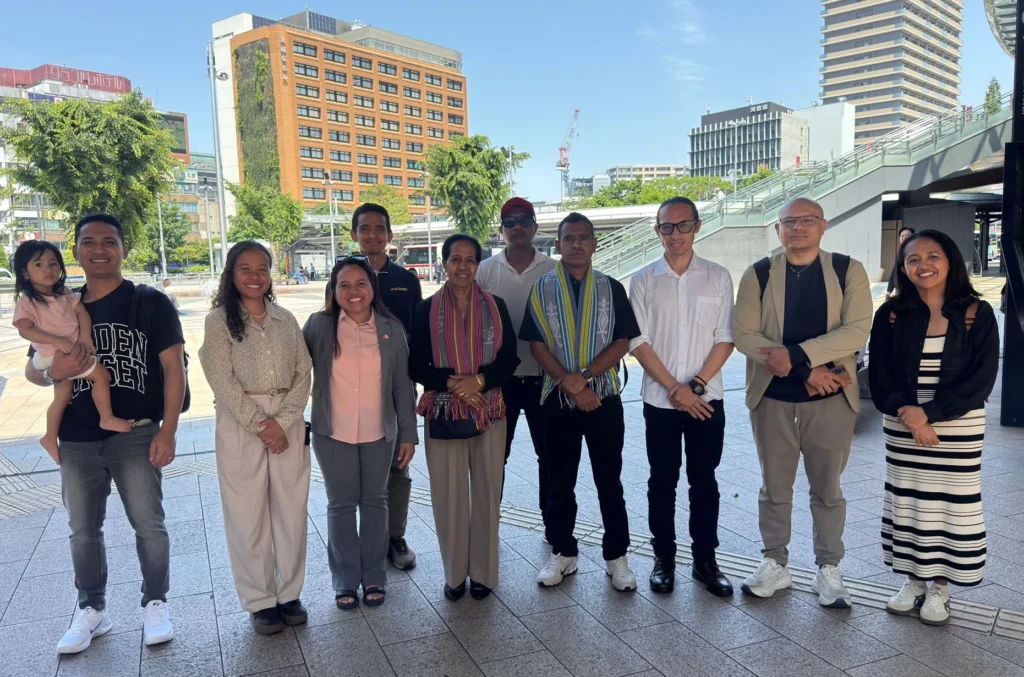
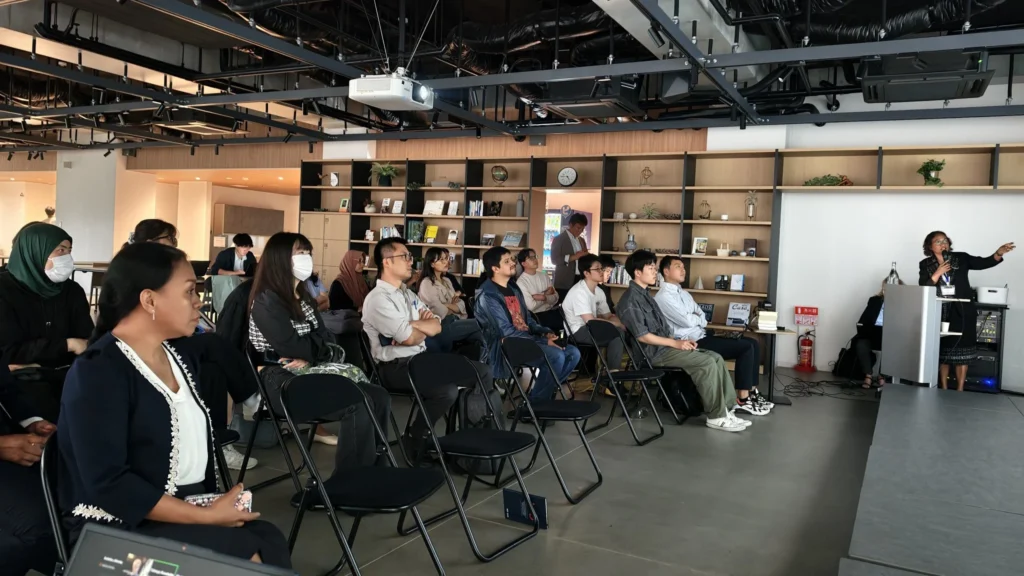
HIROSHIMA, 14 May 2026 — On the afternoon of the same day during the official working visit to Hiroshima, H.E. Mrs. Dulce de Jesus Soares, Minister of Education of the Democratic Republic of Timor-Leste, delivered a presentation to Master’s and Ph.D. students at Hiroshima University. The session was held at one of the university’s cafeteria halls and focused on the topic:
“The Current Landscape and Future Vision of Education in Timor-Leste.”
During her presentation, the Minister outlined several key priority areas in the education sector, including curriculum development, teaching and learning resources, school management, and the improvement of teacher quality. She also highlighted the Government’s ongoing efforts to strengthen the education system through reforms aimed at building a more professional and qualified teaching workforce.
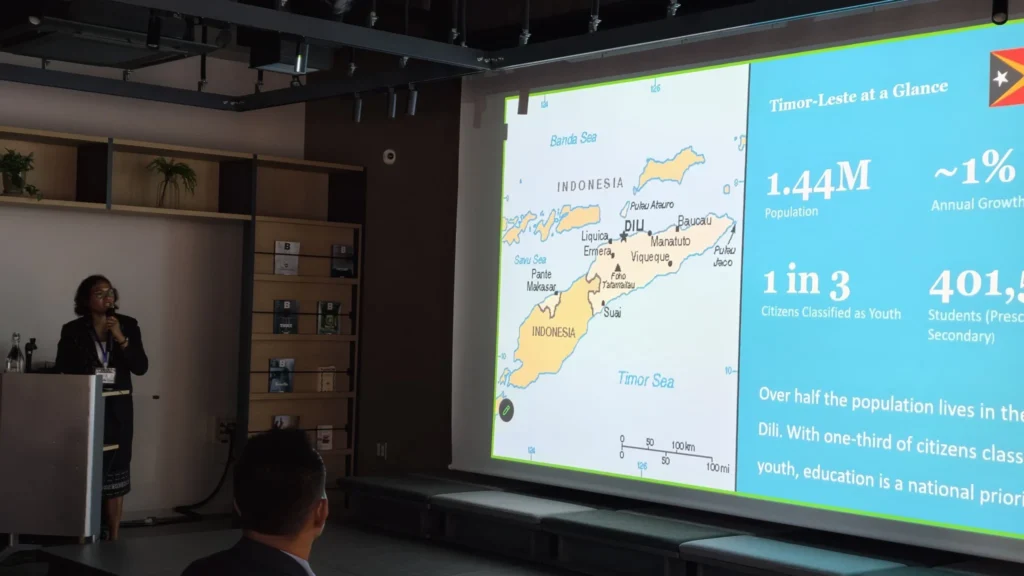
Minister Dulce explained the transformation of the teacher recruitment system in Timor-Leste. For more than two decades, the volunteer teacher system had been widely practiced, where school leaders often recruited relatives, friends, and neighbors as teachers without proper vetting, qualifications, or merit-based requirements. Since 2023, however, major reforms have been introduced, including the establishment of staffing profiles for every school, the implementation of computer-based examinations with transparent and immediate results, and the successful completion of several merit-based recruitment rounds supported by stronger planning and broad public support across different social and political groups.
Furthermore, the Minister emphasized the importance of mentoring programs, teacher working groups, and the development of a teacher competency framework as part of broader educational reforms. She also introduced the EMULI Multilingual Education Program, which began in 2021 in 10 schools and has now expanded to 88 schools across three municipalities. The program helps children transition from their mother tongue to Tetun and Portuguese, supporting inclusive and effective learning outcomes.
In addition, the Minister underscored Japan’s longstanding support for the education sector in Timor-Leste. She noted that Japan was among the first and largest donors to respond following the 1999 crisis, particularly through the assistance of the Japan International Cooperation Agency (JICA). Japan’s contributions include the deployment of educational volunteers to schools throughout Timor-Leste, youth exchange initiatives, and scholarship opportunities for Timorese students pursuing higher education in Japan.
The presentation concluded with an engaging question-and-answer session followed by a group photograph with the students and participants.